ROLE
Product Designer
TEAM
A Designer, a product associate, and, founder
PLATFORM
Mobile App
DURATION
2 weeks
ALT is an early-stage AI fashion discovery app built with a user-first and unbiased discovery approach. The search and discovery at ALT are not influenced by paid placements or brand promotions.
Rather the search results are based on
User personalization
Brand quality
3
Brand-category score
At the same time, our runway was limited and founders wanted to test monetization signals early. Also, there were no clear industry benchmark existed.
The challenge
The challenge was not just where to charge, but whether users would accept being charged at all. It was all about introducing monetization in app without breaking the trust or confusing the users, while still validating willingness to pay for this.
There were also other constraints - users didn't yet fully understand the product's value and there were no proven pricing models.
My role
I worked closely with founder and a product associate on monetization strategy, designed monetization entry points and UI, decided when and how access will be restricted, and handled UX trade-offs.
Explorations and Decisions
Before exploring, we're aligned on a goal which is that users should experience the value before hitting the paywall.
How are consumer AI startups monetize their product?
I explored how other consumer AI products approach monetization and found most of the consumer AI startups fall into two dominant models - Subscription-based access and usage-based pricing.
The usage patterns of the products were frequent or continuous. In contrast, ALT’s usage pattern is closer to fashion shopping apps, where users engage a lot during specific shopping moments rather than returning daily.
Where to monetize?
We listed all the features that could potentially be monetized. The features were,
Search
Brand discovery
3
Price comparison
4
Price-drop alerts
Limiting the number of searches?
We also thought if we can go with usage-based pricing by limiting the number of searches per day. However, we decided against this approach because users would struggle to see the value of paying per search.
Where to restrict access?
Search and brand discovery both eventually lead users to Product Listing Page(PLP), where product breadth and price comparison becomes meaningful.
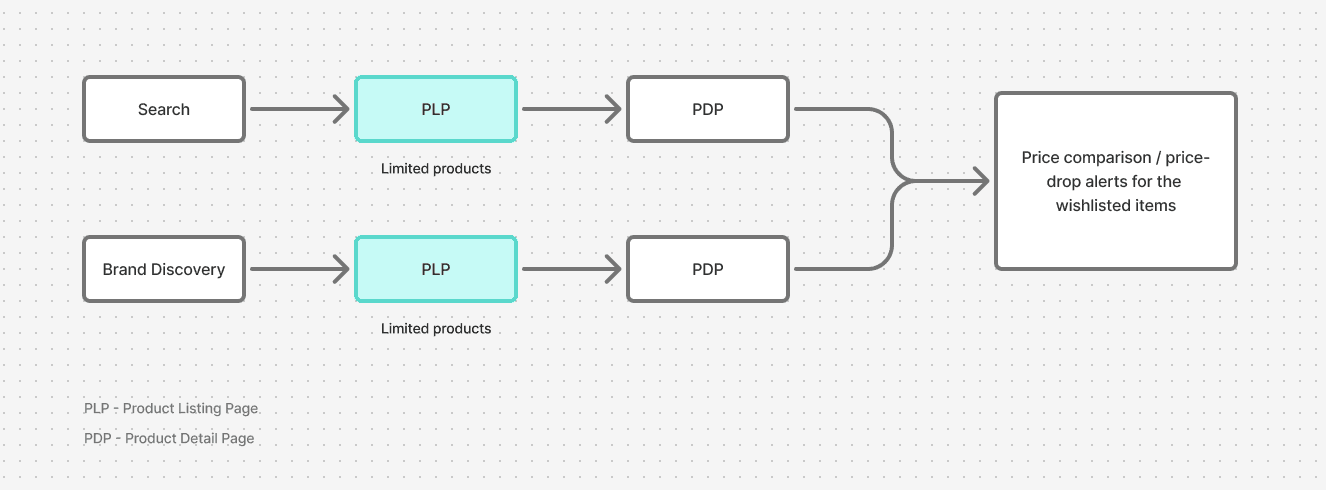
Instead of blocking entry points, we limited the number of products visible on the PLP. This let users experience value before seeing monetization, while keeping access fair and easy to understand.
To decide how many products to show, we used real exploration behavior. Each load more action in PLP surfaced 24 products, and analysis showed that most users naturally explored 2–4 loads before stopping or refining their search. This translated to a meaningful discovery range of 48–96 products.
Based on this, we initially limited the PLP to 96 products, ensuring users experienced sufficient variety and price comparison before encountering the gate.
Choosing the pricing model
After figuring out where to restrict users, we had to decide a pricing model that aligns with ALT's usage pattern.
While exploring monetization patterns beyond consumer AI tools, I noticed that some intent-driven products offer contextual or time-bound access alongside subscriptions. For example, platforms like FanCode allow users to pay for a specific match or league, while also offering broader subscriptions for frequent viewers. This reinforced the idea that when usage is tied to specific moments rather than daily habits, access should reflect that intent.
ALT follows a similar pattern. Users typically engage during specific shopping moments, not on a daily basis.
Based on this, we aligned on time-based access passes with short-duration, allowing users to pay only when they actively needed the product. In addition, we also offered monthly and yearly plan for the users who understood the the value and preferred longer access, enabling gradual commitment instead of forcing them at first.
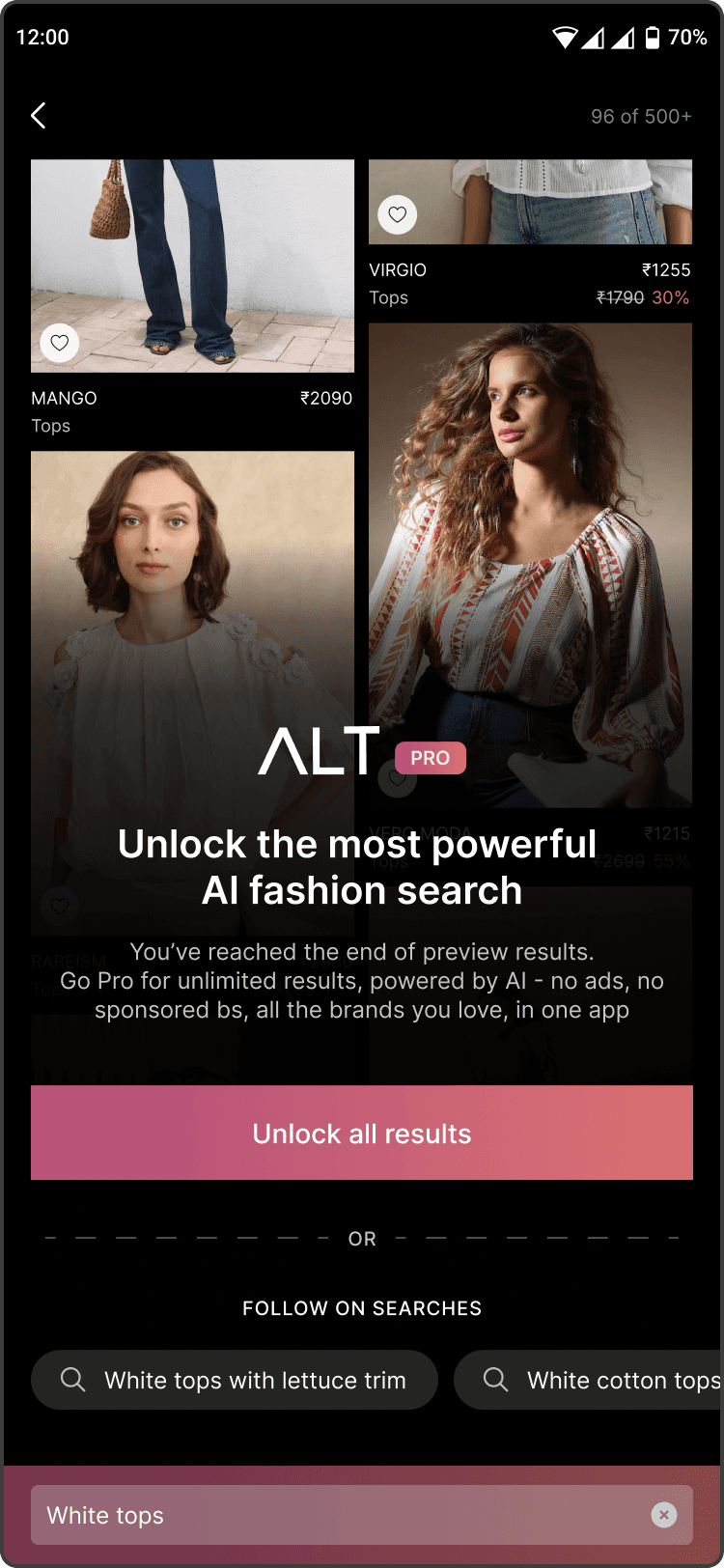
PLP gating & Follow-up searches
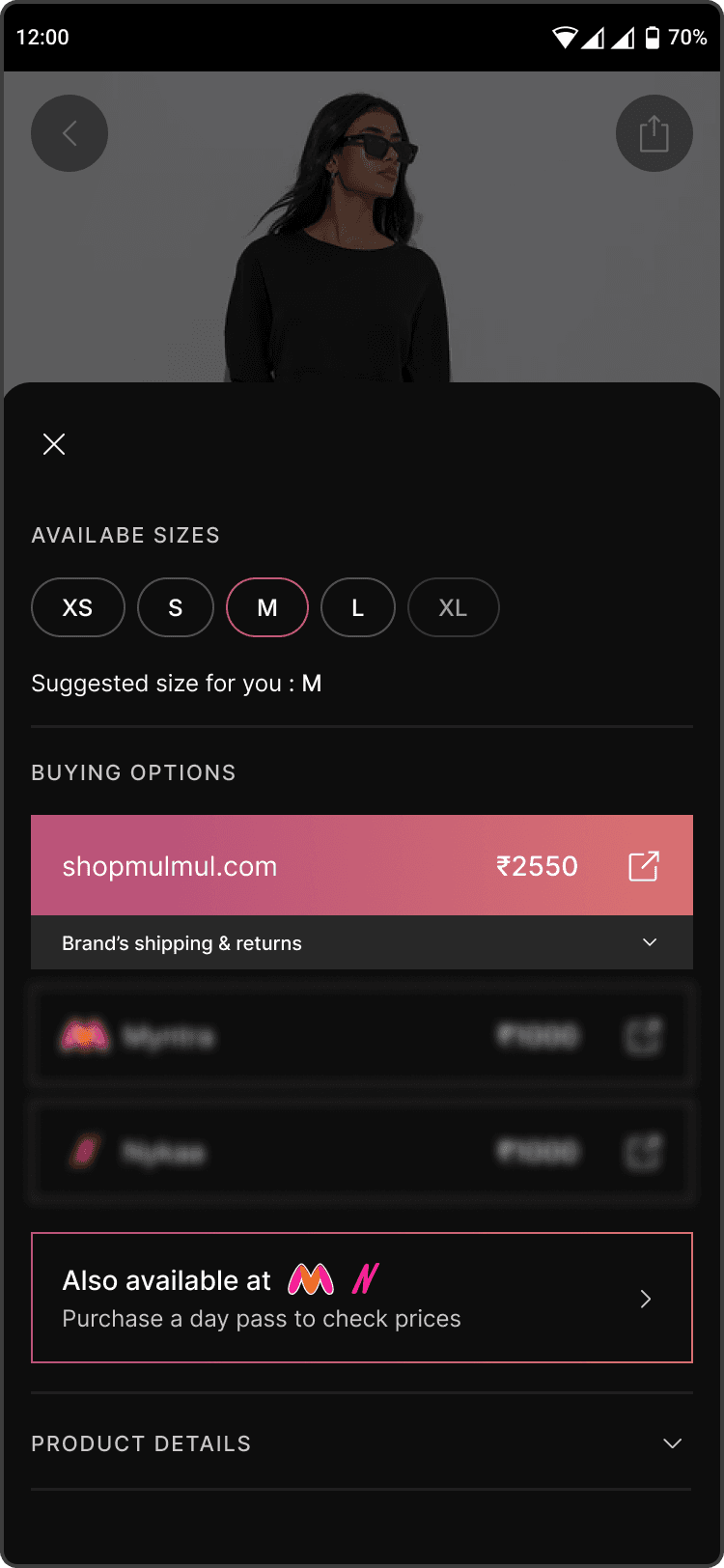
Price comparison in PDP
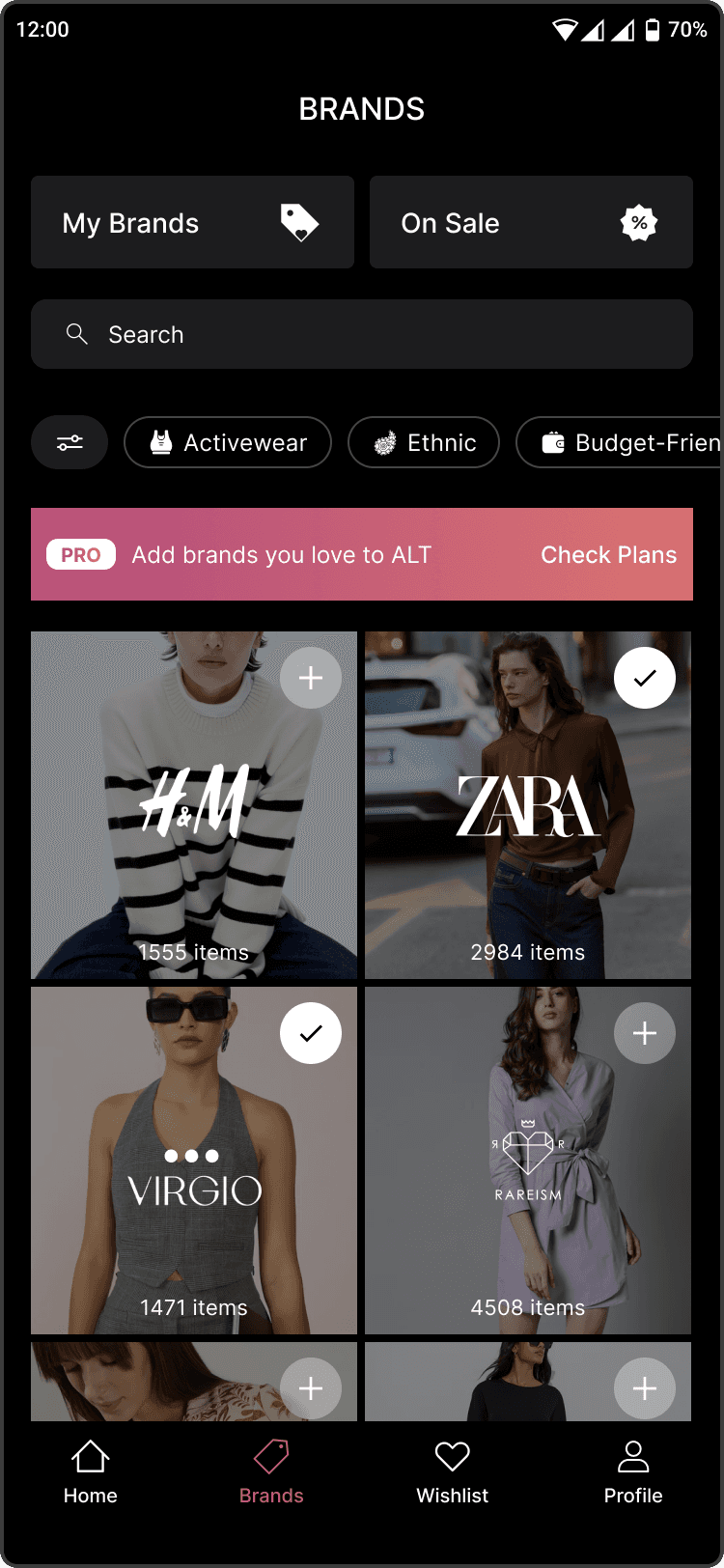
Brands Page
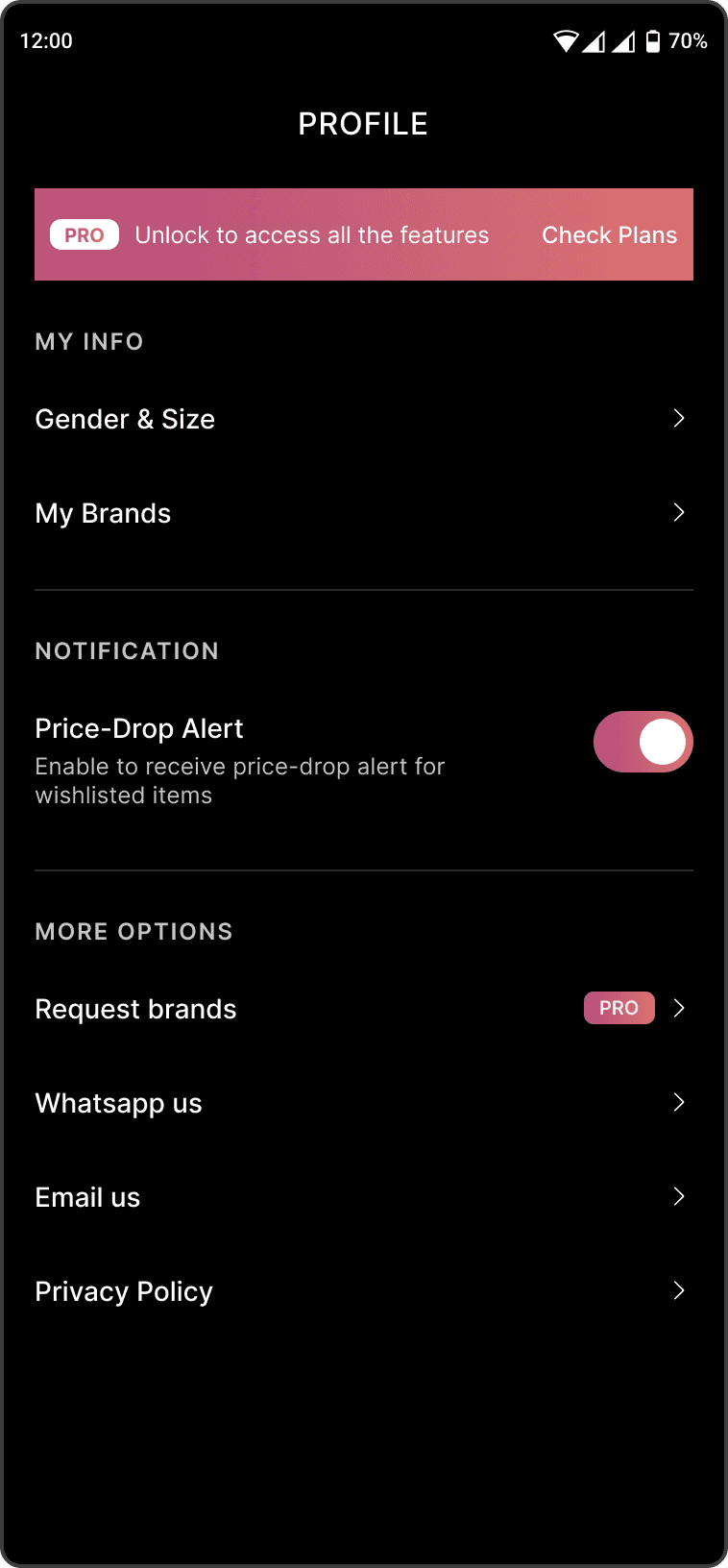
Profile(Free tier)
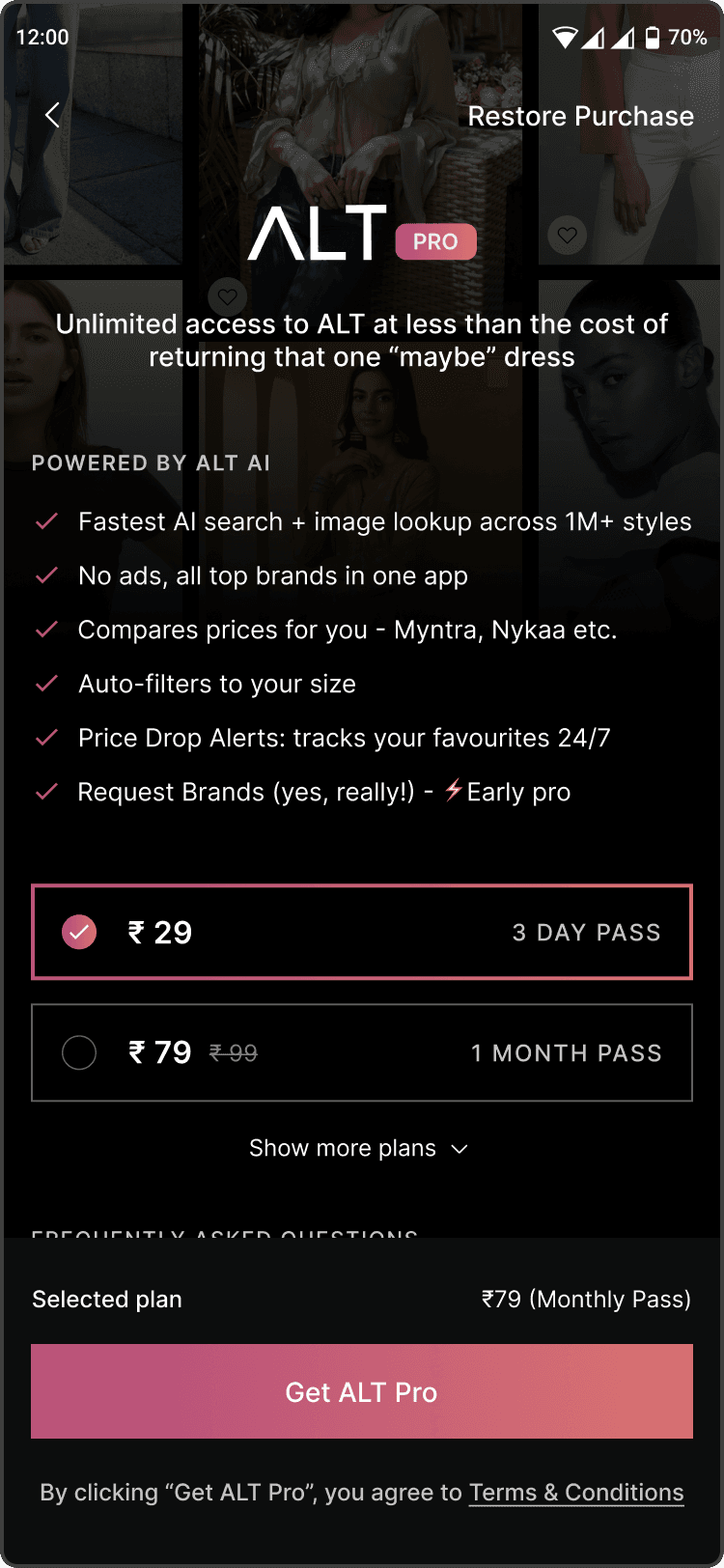
Paywall
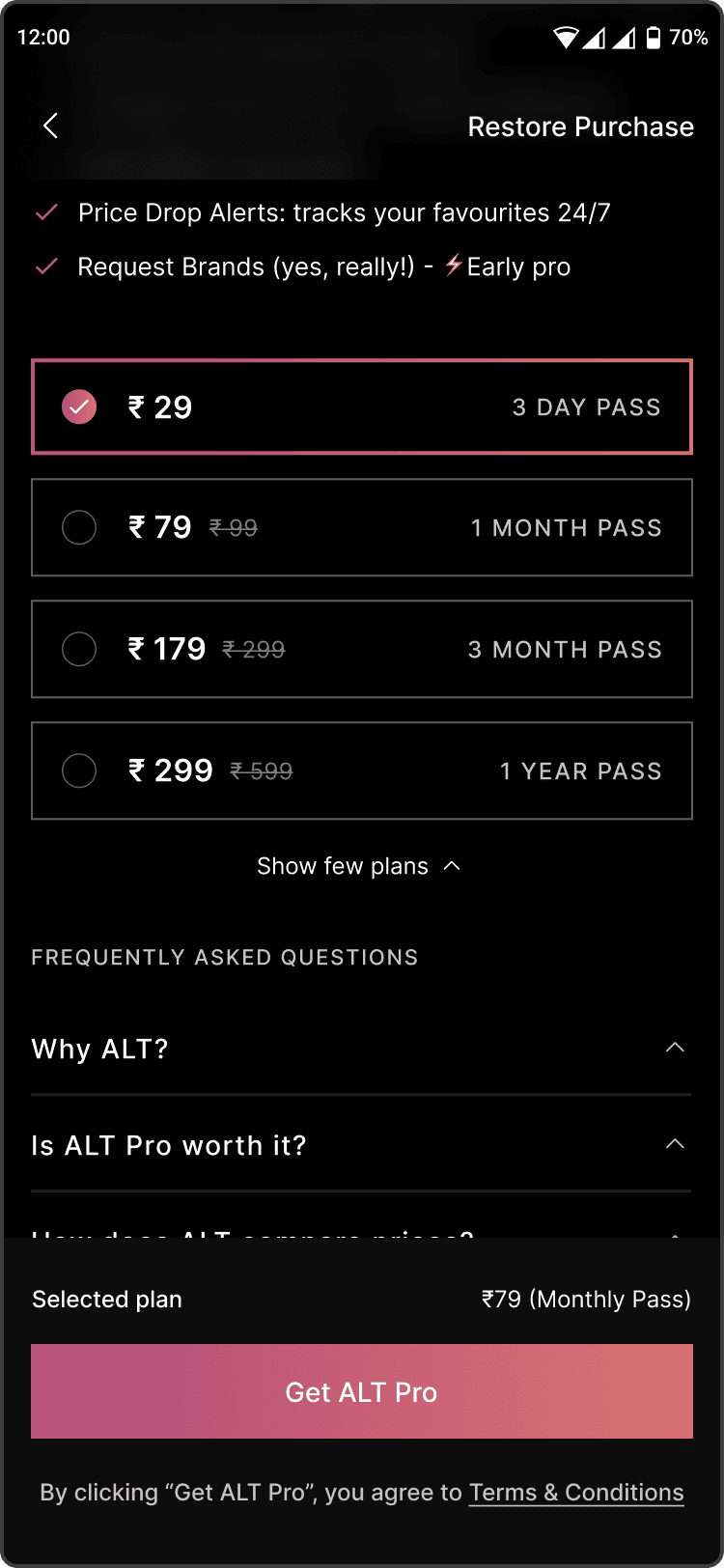
Paywall with all plans
Payment Success
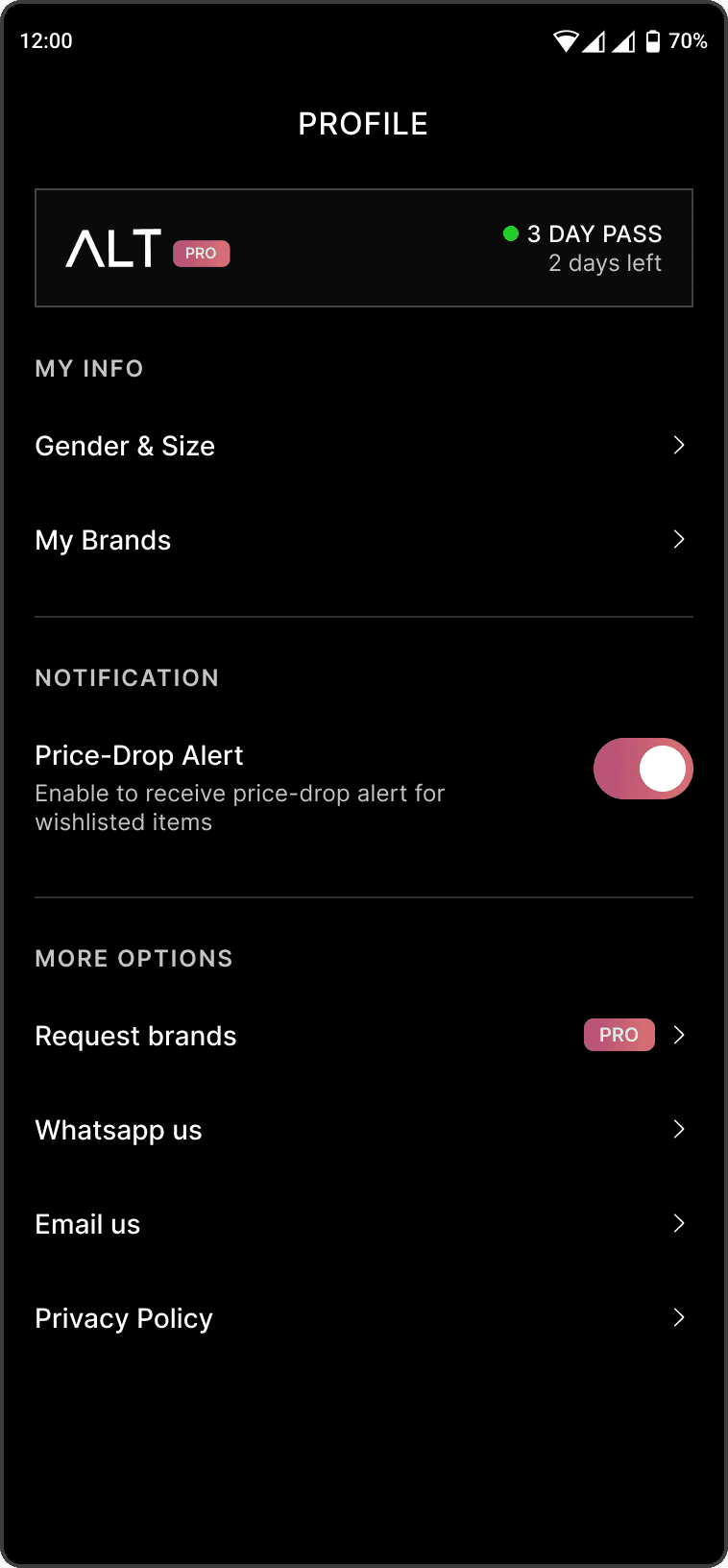
Profile(Pro)
Monetization was launched in the end of October's first week as an early experiment to validate willingness to pay.
Generated repeat purchase behavior within the first launch cohort.
3 Day pass became the most purchased plan and the least was the 3 month plan.
3
Observed drop-offs due to PLP gating and we moved the gate further down to align with natural exploration behavior.
4
Beyond early revenue, it helped to identify high-intent users with repeat purchases and clarified power usage in a non-habit forming app.